While a varied diet is the foundation, two specific supplements are strongly recommended:
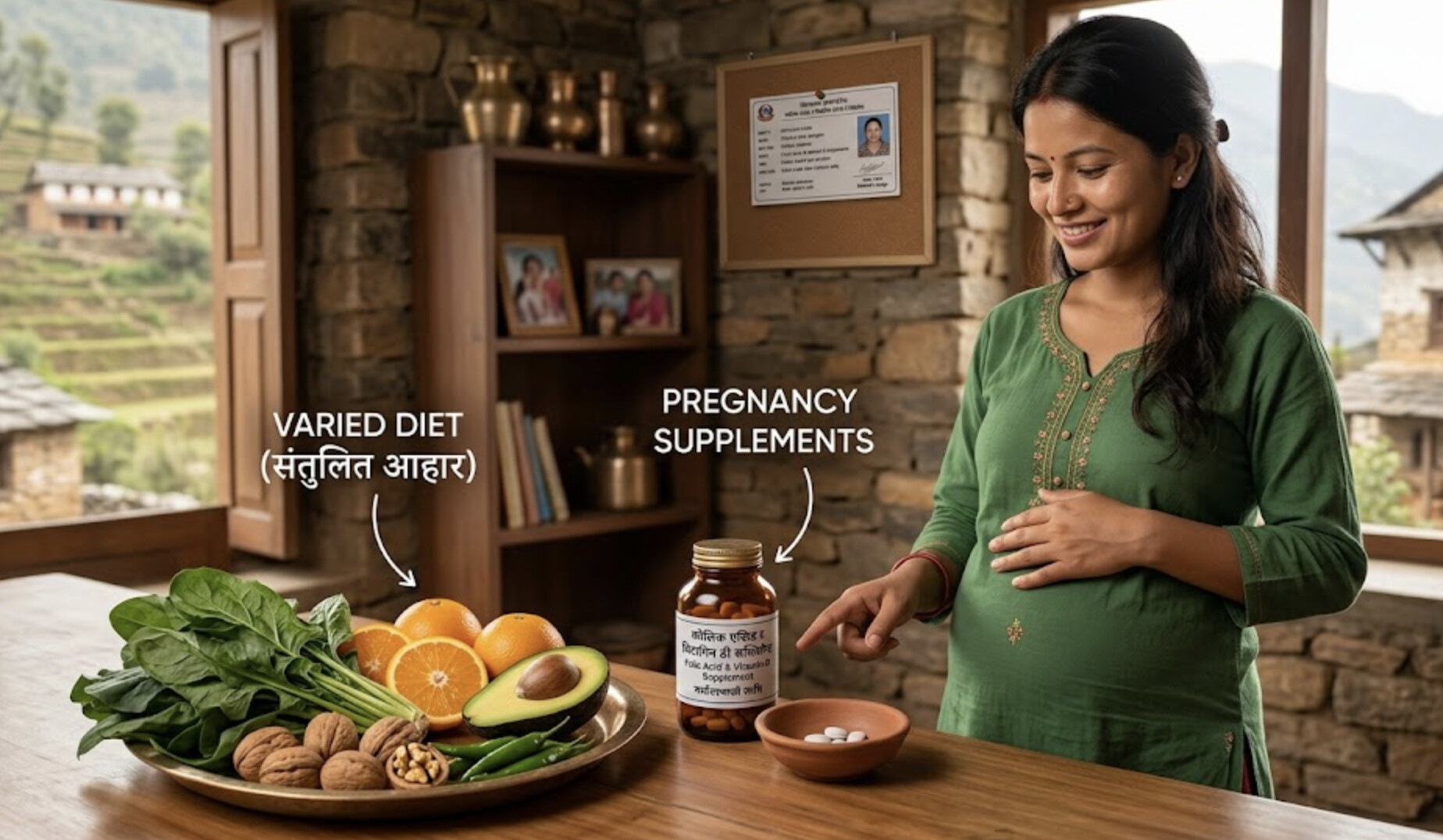
Folic Acid
Take 400 micrograms daily from before conception until the 12th week of pregnancy. This helps prevent neural tube defects like spina bifida.
Note: A higher dose (5mg) may be prescribed by a GP if you:
- Have diabetes
- Have a family history of neural tube defects
- Take certain medications (e.g., for epilepsy or HIV)
Vitamin D
Take 10 micrograms daily.
- Especially important between September and March when sunlight is limited.
- If you have dark skin (African, Caribbean, or South Asian origin) or cover your skin, consider taking it all year round.
What to Avoid
Some supplements and foods can be harmful to your baby:
Vitamin A (Retinol)
Avoid supplements containing Vitamin A or cod liver oil. High levels of Vitamin A can be toxic to the baby.
Liver
Avoid eating liver or liver products because they contain very high levels of Vitamin A.
Key Nutrients from Food
You can get most other nutrients through a balanced diet:
| Nutrient | Why It’s Needed | Good Food Sources |
|---|---|---|
| Iron | Prevents tiredness and anaemia | Lean meat, leafy greens, dried fruit, nuts, fortified cereals |
| Calcium | Builds baby’s bones and teeth | Milk, cheese, yoghurt, tofu, sardines (with bones) |
| Vitamin C | Protects cells and keeps them healthy | Oranges, strawberries, peppers, broccoli, potatoes |
| Folate | Natural form of folic acid | Green leafy vegetables |
Special Dietary Considerations
Vegetarians/Vegans
You may find it harder to get enough Iron and Vitamin B12. Speak with your midwife or GP about your diet.
Restricted Diets
If you are gluten-free or have food intolerances, ask for a referral to a dietitian to ensure you are meeting all nutritional needs.
The Healthy Start Scheme
If you are pregnant or have a child under 4 and receive certain benefits (or are under 18), you may qualify for the Healthy Start scheme.
This provides:
- A card to buy milk, fruit, and vegetables
- Free vitamins
Check with your midwife to see if you are eligible or if your local NHS offers them for free.
Important: Always check the label on multivitamin bottles to ensure they are safe for pregnancy and do not contain Vitamin A.